
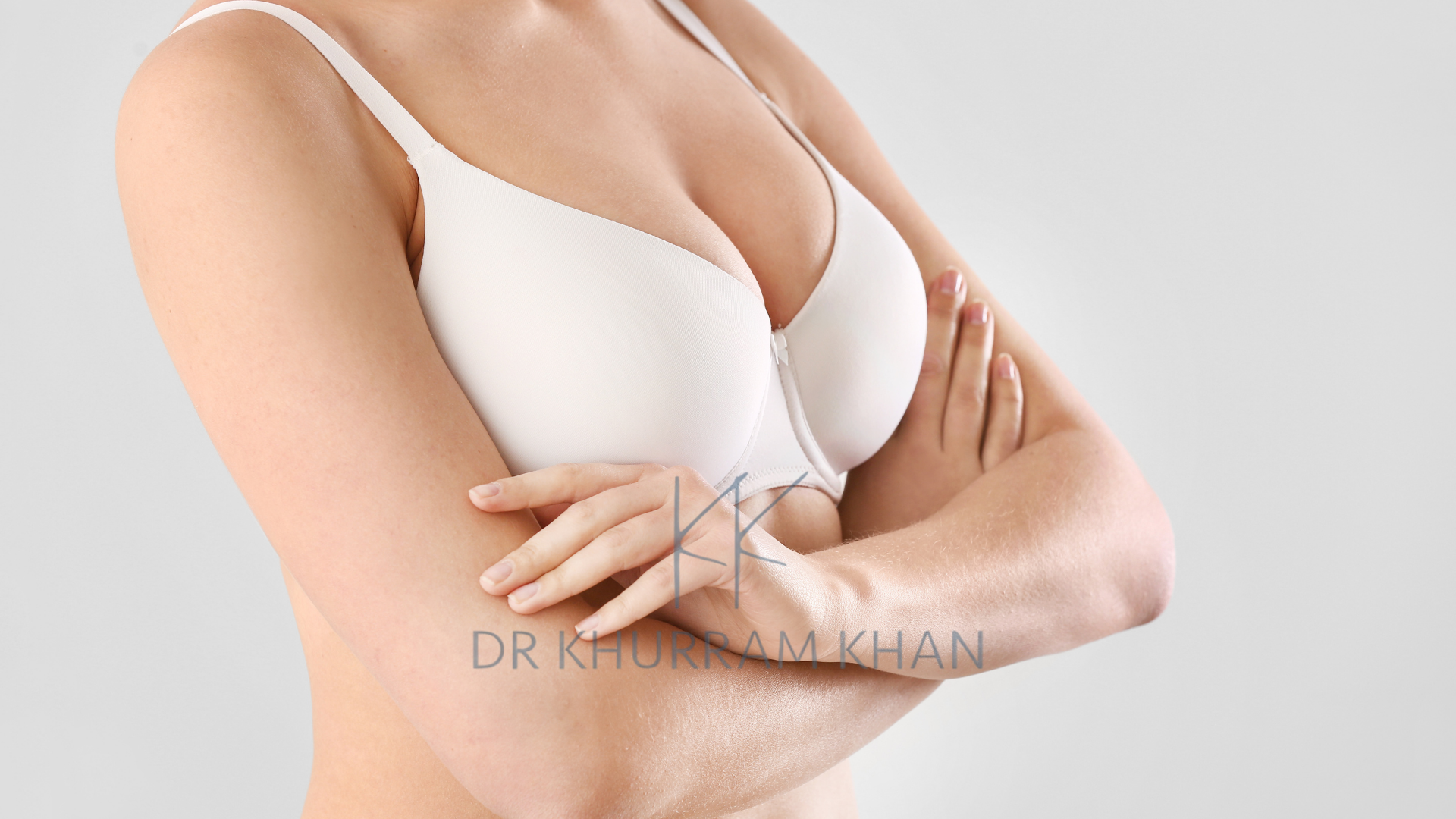
Breast lift (mastopexy) is a surgical procedure designed to restore youthful breast position and shape by correcting ptosis (sagging). Unlike breast reduction which removes significant tissue, or augmentation which adds volume, breast lift focuses on reshaping existing tissue and removing excess skin to create firmer, more elevated breasts. The procedure addresses the effects of gravity, pregnancy, breastfeeding, weight changes, and ageing, creating breasts that sit higher on the chest with improved contour and projection whilst maintaining or slightly reducing existing volume.
- Corrects Sagging:
Addresses breast ptosis caused by pregnancy, weight loss, ageing, or genetics - Restores Position:
Elevates breasts to more youthful position with nipple repositioned higher on breast mound - Improves Shape:
Creates firmer, rounder breast contour with better projection and upper pole fullness - Can Combine with Augmentation:
Often performed with implants (augmentation-mastopexy) to restore volume and lift simultaneously - Long-Lasting Results:
Provides years of improvement though gravity and ageing gradually affect appearance over time
Understanding Breast Ptosis (Sagging)
Breast ptosis refers to drooping or sagging breasts where the breast tissue descends on the chest wall and the nipple falls below the natural breast fold (inframammary fold). Ptosis is graded by severity based on nipple position relative to the fold.
Grading Breast Ptosis
Grade I (Mild): Nipple at level of inframammary fold, minimal sagging. Grade II (Moderate): Nipple below fold but above lowest breast contour. Grade III (Severe): Nipple at lowest breast point, pointing downward. Pseudoptosis: Nipple above fold but breast tissue droops below, often from volume loss.
Causes of Breast Sagging
Multiple factors contribute to ptosis including pregnancy and breastfeeding (tissue expansion and subsequent involution causes sagging), significant weight loss (volume loss leaves excess skin), ageing (loss of skin elasticity and tissue firmness), genetics (inherent breast shape and skin quality), gravity over time, and lack of internal breast support (breasts have no muscles, relying on skin and ligaments).
Ideal Candidates for Breast Lift
Breast lift is appropriate for women bothered by sagging breasts who desire more youthful position and shape. Ideal candidates include those with breasts that sag or droop (Grade I-III ptosis), nipples pointing downward or falling below breast fold, loss of breast firmness and shape, asymmetry with one breast more ptotic than the other, satisfaction with breast size (or willing to combine with implants for volume), good general health, stable weight, realistic expectations, non-smokers or willing to stop, and completed or postponed childbearing (pregnancy after lift may affect results).
Volume Considerations
Breast lift alone does not add volume; it reshapes existing tissue. Women desiring both lift and increased fullness benefit from augmentation-mastopexy (lift plus implants). Those satisfied with existing volume but desiring better position choose lift alone. Some volume loss occurs with lift as excess skin is removed and tissue tightened.
The Breast Lift Surgical Procedure
Breast lift is performed under general anaesthesia, taking 2-3 hours. Most patients go home the same day.
Surgical Techniques and Incision Patterns
Technique selection depends on ptosis severity, breast size, and desired outcome.
Crescent Lift: For very minimal ptosis, a small crescent-shaped incision along the upper areolar border lifts the nipple slightly. This creates minimal scarring but provides limited lift—suitable only for borderline cases.
Periareolar (Donut) Lift: Incisions circle the areola. Excess skin around the areola is removed, lifting the nipple and tightening surrounding tissue. This suits mild ptosis, creates a scar only around the areola (often fades well), but provides moderate lift with risk of areolar flattening or widening.
Vertical (Lollipop) Lift: Incisions around the areola and vertically down to the breast fold. This addresses moderate ptosis, provides good lift and reshaping, and creates vertical scar in addition to periareolar scar—very commonly used for moderate sagging.
Anchor (Inverted-T) Lift: Incisions around areola, vertically down, and horizontally along breast fold (identical to breast reduction pattern). This addresses severe ptosis or very large breasts, allows maximum lift and reshaping, but creates most extensive scarring—necessary for significant ptosis correction.
Surgical Steps
The surgeon marks the new nipple position (higher and more centered), marks incision lines according to chosen technique, makes incisions and removes excess skin, reshapes remaining breast tissue for improved contour and projection, repositions nipple-areola complex to appropriate height (maintaining blood supply and nerve connections), closes incisions meticulously in layers, and applies surgical dressings and support bra.
Nipple Sensation and Function
The nipple remains attached to underlying tissue (pedicle) preserving blood supply and sensation in most cases. Temporary numbness is common but usually resolves. Rarely, permanent sensation changes occur. Breastfeeding ability may be affected though many women can breastfeed after lift.
Recovery and Healing After Breast Lift
Immediate Post-Operative (Week 1)
Discomfort is moderate—tightness and soreness managed with prescribed analgesia. Swelling and bruising expected. Surgical bra worn continuously. Most patients mobile next day with light activities encouraged. Arm movements restricted; no reaching overhead or heavy lifting.
Early Recovery (Weeks 2-6)
Most patients return to desk work within 1-2 weeks. Swelling gradually diminishes. Support bra continues for 6 weeks. Sutures typically dissolving; any non-dissolving removed around 10-14 days. Gentle activities resume but strenuous exercise, heavy lifting, and vigorous upper body movements restricted for 4-6 weeks.
Long-Term Healing (Months 3-12)
Final breast shape emerges over 3-6 months as swelling resolves and tissues settle. Breasts initially appear high and firm, gradually softening and settling into natural position. Scars mature over 12-18 months, initially red/pink fading to pale thin lines. Sensation changes typically improve though some permanent alteration possible.
Results and Expectations from Breast Lift
Expected Improvements
Breast lift achieves elevated breast position with nipples pointing forward rather than downward, improved breast shape with better projection and upper pole fullness, firmer breast contour, more youthful appearance, improved breast symmetry, and enhanced confidence in clothing and swimwear.
Scarring
Breast lift creates permanent scars. Extent depends on technique used—periareolar alone creates least scarring, anchor pattern creates most. Scars are initially red but fade significantly over 12-18 months to pale thin lines. Most scars are well-concealed by bras and swimwear. The trade-off—exchanging sagging breasts for lifted breasts with scars—is acceptable to most patients seeking improved shape.
Longevity of Results
Breast lift provides long-lasting improvement—typically 10-15 years. However, gravity, ageing, weight changes, and pregnancy gradually affect breast position over time. Maintaining stable weight and wearing supportive bras help preserve results. Some women choose revision lift years later to maintain youthful appearance.
Realistic Expectations
Breast lift cannot achieve permanent resistance to gravity or prevent future ageing, restore volume lost from pregnancy/weight loss (augmentation needed), create large breasts from small breasts (augmentation needed), or guarantee perfect symmetry (breasts always slightly asymmetric naturally). Goals are improvement and rejuvenation within realistic anatomical constraints.
Patient Satisfaction
Breast lift has high satisfaction rates. Women report improved body image and confidence, freedom in clothing choices, more youthful appearance, and enhanced quality of life. Many describe feeling “restored” to their pre-pregnancy or younger body.
Combining Breast Lift with Augmentation
Many women benefit from combining lift with augmentation (implants). This addresses both sagging position and volume loss simultaneously—common after pregnancy or weight loss where breasts lose fullness and sag.
Augmentation-Mastopexy Benefits
Single surgery addresses both concerns, restores upper pole fullness lost with ageing, creates lifted AND fuller breasts, and often achieves better long-term shape maintenance (implant provides internal support).
Complexity and Considerations
Combined procedures are technically more complex with longer surgery time, increased complication risks (particularly wound healing issues), and require careful planning balancing lift extent with implant size. Some surgeons prefer staging procedures (lift first, implant later or vice versa) for severe ptosis to optimize safety and outcomes. During consultation, your surgeon will advise whether single-stage or staged approach is most appropriate.
Choosing Your Surgeon for Breast Lift
Breast lift requires exceptional surgical skill to achieve beautiful, natural-appearing results whilst minimizing complications and scarring. Selecting an experienced surgeon is crucial.
Essential Qualifications
Your surgeon should be a fully accredited Consultant Plastic Surgeon on the GMC Specialist Register, a member of BAPRAS or BAAPS, specifically experienced in breast surgery, and regularly performing breast lifts.
Specialist Expertise
Mr Khurram Khan is a distinguished Consultant Plastic Surgeon with extensive experience in breast lift surgery. His expertise encompasses accurate assessment of ptosis severity and appropriate technique selection, meticulous surgical technique optimizing shape whilst minimizing scarring, experience with augmentation-mastopexy when appropriate, and comprehensive post-operative care. His commitment to achieving natural, beautiful, proportionate results ensures patients receive exceptional care and optimal outcomes.
Comprehensive Consultation
Consultation should include thorough breast examination and ptosis assessment, discussion of your concerns and aesthetic goals, explanation of appropriate techniques and incision patterns, realistic discussion of outcomes and scarring, consideration of whether augmentation would be beneficial, review of before-and-after photographs, and discussion of risks, recovery, and long-term expectations.
For women considering breast lift, contacting Mr Khan’s practice provides expert assessment and guidance toward achieving youthful, lifted, beautiful breasts.
Frequently Asked Questions About Breast Lift
What’s the difference between breast lift and breast reduction?
Breast lift (mastopexy) removes excess skin and reshapes tissue to correct sagging whilst maintaining or slightly reducing breast volume. It’s for women satisfied with breast size but bothered by drooping position. Breast reduction removes significant breast tissue, fat, and skin to reduce breast size AND lift simultaneously—for women with overly large breasts causing symptoms (back pain, etc.). If you have large, sagging breasts causing physical symptoms, reduction addresses both size and position. If you have moderate-sized sagging breasts without symptoms, lift alone is appropriate. During consultation, your surgeon will recommend the most suitable procedure.
Can I have breast lift if I plan future pregnancies?
Breast lift can be performed before pregnancy and doesn’t prevent pregnancy or breastfeeding. However, subsequent pregnancy may affect results as breast changes during pregnancy and breastfeeding can cause renewed sagging. Many surgeons recommend waiting until childbearing is complete for longest-lasting results. If you cannot wait and desire lift now, understand revision may be needed after pregnancy. Breastfeeding is often still possible after lift though not guaranteed. Discuss your family planning during consultation to make an informed decision about optimal timing.
Will breast lift make my breasts bigger?
No, breast lift alone does not increase breast size. It reshapes existing tissue and removes excess skin, creating lifted, firmer breasts that may appear fuller due to improved shape and projection, but actual volume is maintained or slightly reduced. If you desire both lift AND increased size, augmentation-mastopexy (lift plus implants) is appropriate. This combines lifting sagging tissue with adding volume through implants, addressing both concerns simultaneously. During consultation, discuss whether lift alone or combined with augmentation best achieves your aesthetic goals.
How long do breast lift results last?
Breast lift provides long-lasting improvement—typically 10-15 years before significant sagging recurs. However, breasts continue aging after surgery; gravity, skin elasticity loss, weight changes, and hormonal factors gradually affect position over time. Maintaining stable weight, wearing supportive bras, and healthy lifestyle help preserve results longer. Some women choose revision lift after 10-15+ years to maintain youthful appearance. Results are NOT permanent, but they provide many years of improved shape and position. Most patients find the long-lasting improvement well worth the procedure.


